Table of Contents
- Start With a Safe Home Routine for Neck Pain Relief
- Neck Pain When Turning Head Causes: What Your Symptoms Tell You
- Neck Pain Stretches and Exercises You Can Do at Home
- Heat or Ice for Neck Pain: Which to Use and When
- Fix Posture and Everyday Habits That Strain Your Neck
- When to Seek Care for Neck Pain
- Medication Safety and What to Avoid
- Conclusion
- Frequently Asked Questions
Last Updated: October 21, 2026
Start With a Safe Home Routine for Neck Pain Relief
Most neck pain settles with simple self-care, and learning how to relieve neck pain at home can start today. Learning how to relieve neck pain at home begins with one rule: keep moving gently and never push into sharp pain. At Strudwick Chiropractic, we tell patients the same thing on day one. Rest for a day or two, then get the neck moving again.
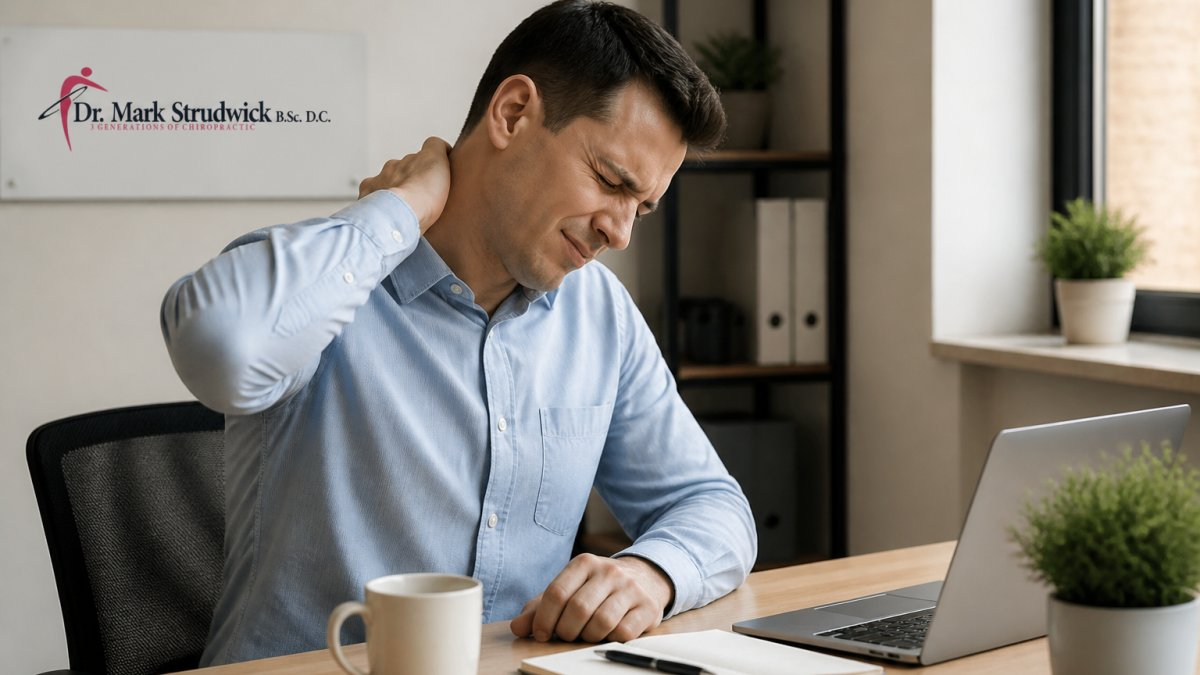
Neck pain is discomfort anywhere from the base of the skull to the top of the shoulders. It often comes from muscle tension, joint dysfunction, poor posture, or a muscle strain.
A safe routine has three parts:
- Gentle movement to keep the joints loose
- Heat or ice to calm sore tissue
- Posture fixes to stop the strain coming back
Start slow. Do a little, then check how you feel.
Don’t spend days lying still with your neck propped on a pillow. Long rest makes muscles stiffen and slows recovery. Move gently within the first day or two.
Our team has over 25 years of clinical experience with neck and back pain.
Neck Pain When Turning Head Causes: What Your Symptoms Tell You
Neck pain when turning the head usually points to muscle strain or a stiff joint, not something serious. The location and timing of your pain tell you a lot about the cause. Here is how to read the clues.
- Pain on one side when you look over your shoulder: often a muscle strain or joint irritation
- Stiffness that eases as you move: common with muscle tension and poor sleep position
- A dull ache at the desk by mid-afternoon: usually posture and screen use
- Sharp pain after a sudden jolt: possible neck sprain, so get it checked
A neck strain affects muscles or tendons. A neck sprain affects ligaments. Both settle with gentle care, but a sprain after a fall or car accident deserves a proper assessment.
Watch for other symptoms too. Dizziness, arm tingling, or headaches change the picture. Those signs mean you should see a clinician rather than self-treat.
Neck Pain Stretches and Exercises You Can Do at Home
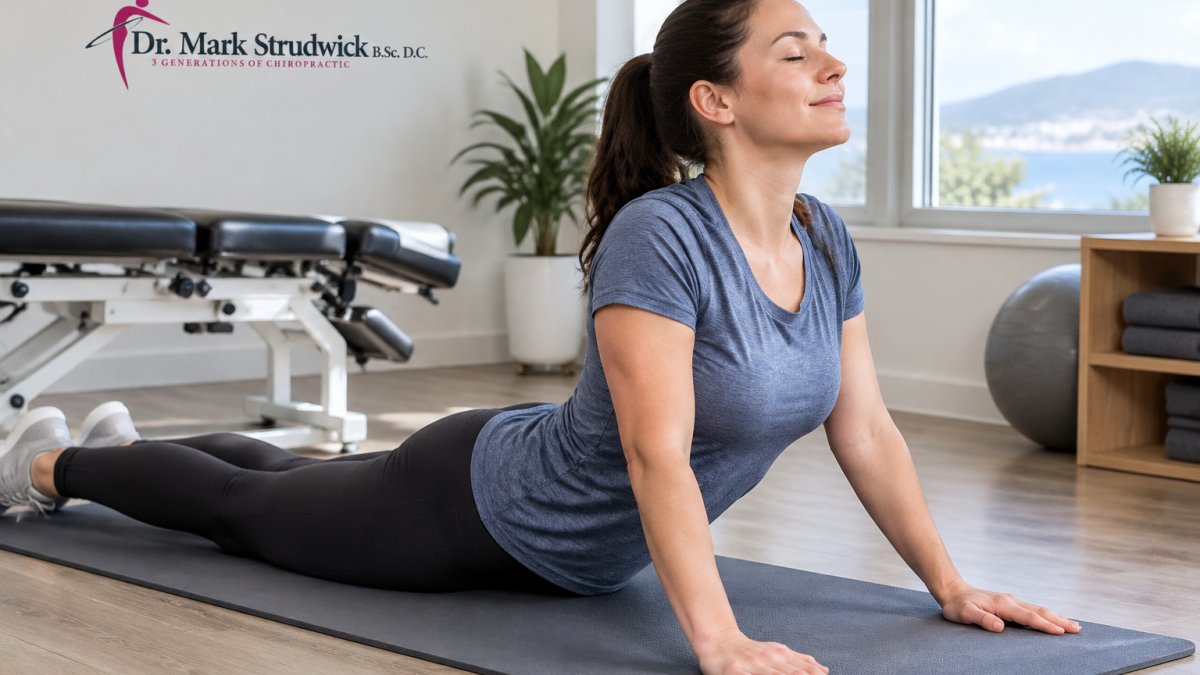
Neck pain stretches and exercises work best when they are slow and gentle. The goal is gentle movement, not a deep stretch. Stop any move that sends sharp pain down your arm.
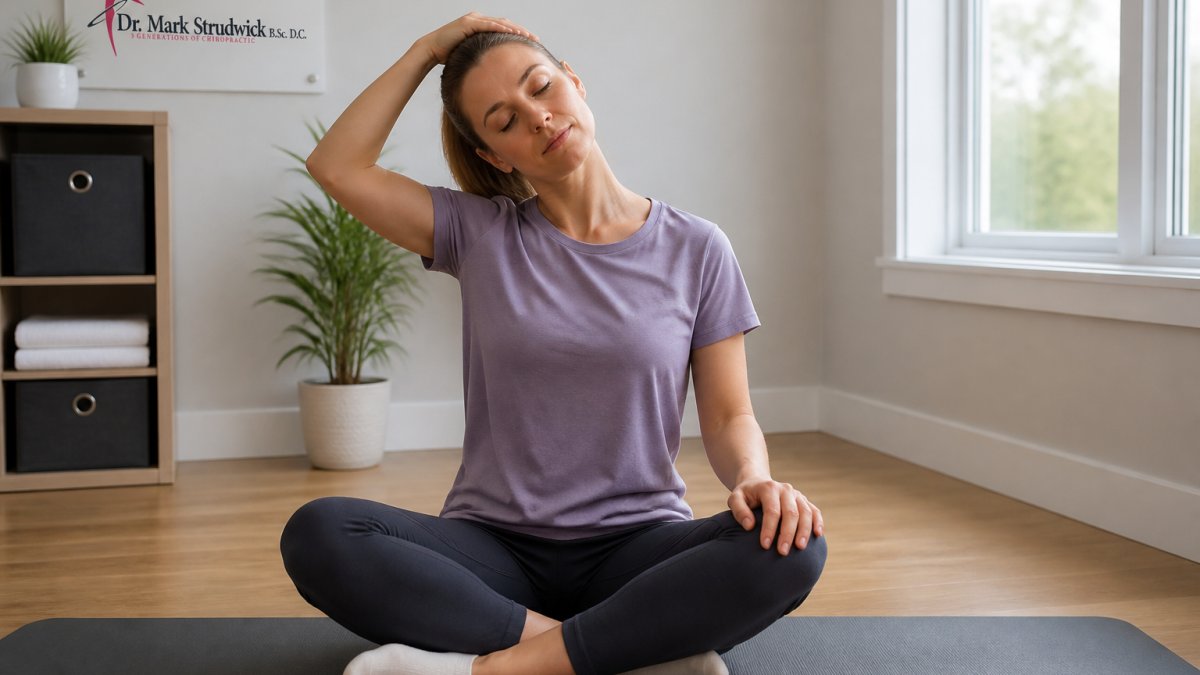
Gentle Stretches for a Stiff Neck
Do these twice a day. Hold each stretch for 20 to 30 seconds and repeat 2 to 3 times. Breathe normally throughout, do not hold your breath.
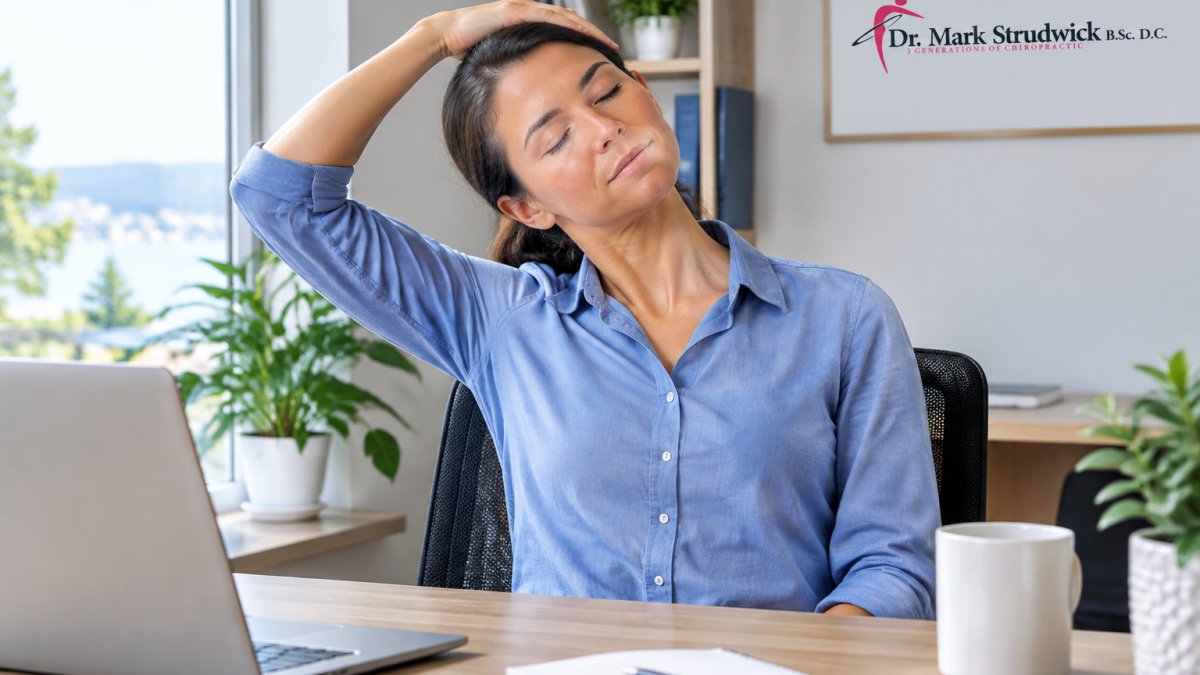
- Side stretch: Sit tall. Tilt your ear toward one shoulder until you feel a light pull. Hold, then switch sides. Keep the opposite shoulder relaxed and down.
- Forward neck flexion: Lower your chin slowly toward your chest. Hold, then return. You should feel a stretch at the back of the neck, not pinching at the front.
- Behind-the-back stretch: Clasp your hands behind your back. Gently draw your shoulders back and down. Hold for 20 seconds, then release.
Mobility and Strengthening Exercises
Range of motion keeps the neck from stiffening. Turn your head slowly left and right, then look up and down. Do 5 to 10 slow repetitions. Move only as far as is comfortable, do not force the end range.
For strength, try a light chin tuck. Pull your chin straight back (make a double chin), hold for 5 seconds, and repeat 10 times. This supports better desk posture.
How to Modify Based on Your Pain Level
- Mild stiffness (pain 1-3 out of 10): Do the full routine twice daily. Add a 5-minute walk after each session to keep circulation moving.
- Moderate pain (4-6 out of 10): Reduce hold times to 10-15 seconds and do one set instead of two. Skip the behind-the-back stretch if it pulls.
- High pain or sharp pain (7+ out of 10): Start with chin tucks only, 5 repetitions, once daily. Add range-of-motion turns in a small arc. If pain does not settle within 48 hours, stop and seek advice.
Cause-Specific Modifications
- Posture-related soreness: Focus on chin tucks and upper-back strengthening (shoulder blade squeezes). Take a movement break every 30 minutes at the desk.
- Muscle strain from sleep or sudden movement: Prioritize gentle range of motion and heat before stretching. Avoid end-range stretches for the first 2-3 days.
- Nerve symptoms (tingling, numbness, or pain down the arm): Do not stretch into the painful range. Keep movements small and pain-free. If symptoms worsen or do not improve within a week, see a clinician.
- After a fall or car accident: Do not start exercises until assessed. Gentle range of motion may be appropriate after a professional evaluation.
Do your stretches after a warm shower. Warm tissue moves more freely, so the same stretch feels easier and safer.If any exercise increases pain, stop immediately. Soreness that lasts more than an hour after exercise is a sign you did too much.
Heat or Ice for Neck Pain: Which to Use and When
Heat or ice for neck pain comes down to timing. Use ice early for a fresh strain, and heat later for ongoing stiffness. Here is the simple split.
| When | Use | Why | How long |
|---|---|---|---|
| First 48 hours after a strain | Cold therapy (ice pack) | Calms inflammation | 10-15 minutes |
| Ongoing stiffness or tension | Heat therapy (warm pack) | Relaxes muscle tension | 15-20 minutes |
| After activity | Either, based on comfort | Eases soreness | 10-15 minutes |
Always wrap ice or heat in a cloth. Never place it directly on skin.
A topical gel can add relief between sessions. Follow the label and check with a pharmacist if you take other medicines.
Fix Posture and Everyday Habits That Strain Your Neck
Posture and everyday habits cause more neck strain than most people realize. Small desk changes ease a lot of tension. Set your screen at eye level so you are not looking down all day.
- Keep your feet flat and your back supported
- Take a short movement break every 30 minutes
- Hold your phone up instead of looking down
- Use a pillow that keeps your neck in line with your spine
Sleep setup matters too. A pillow that is too high or too flat strains the neck overnight. Aim for a neutral position.
The best posture is a changing one. No single position is perfect, so move often and reset your screen height.
When to Seek Care for Neck Pain
When to seek care for neck pain depends on your symptoms, not just the clock. Most cases ease within a few weeks of home care. Book a visit if pain lasts more than two weeks or keeps coming back.
Red Flags: Seek Urgent Care Right Away
Seek urgent care or call emergency services if you have any of the following:
- Numbness, weakness, or tingling in an arm or hand that is new or worsening
- Severe pain after a fall or car accident
- Loss of bladder or bowel control
- Fever, severe headache, or confusion
- Neck stiffness with a high fever and rash
- Difficulty swallowing or breathing
- Drooping on one side of the face or slurred speech
These are red flags. Do not wait them out.
When to Contact a Clinician (Non-Urgent)
Book an appointment with a clinician if:
- Pain lasts more than two weeks despite home care
- Pain keeps coming back after settling
- You have tingling or numbness that is mild but persistent
- Home exercises are not helping or are making things worse
- You want a clear diagnosis and a structured plan
Early assessment can prevent a small strain from becoming a chronic issue.
Cause-Specific Triage
- Posture-related soreness: Try ergonomic changes and movement breaks for 1-2 weeks. If no improvement, seek care.
- Muscle strain from sleep or sudden movement: Gentle care for 3-5 days. If pain is not easing, book a visit.
- Nerve symptoms (tingling, numbness, or pain down the arm): See a clinician within a week. Do not delay if weakness develops.
- After a fall or car accident: Get assessed within 48-72 hours, even if pain seems mild. Some injuries worsen over the first few days.
What to Expect at an Assessment
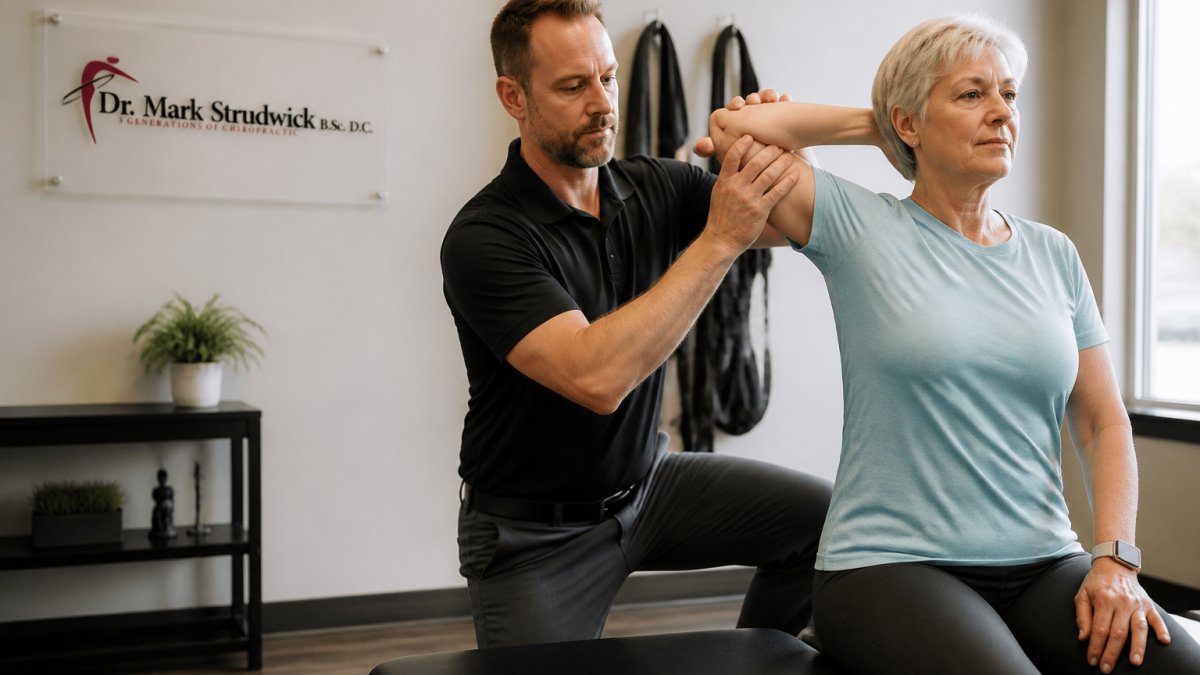
If home care is not working, a clinician can assess what is driving the pain. We look at movement, posture, and strength to find the cause. From there, we build a plan with rehabilitation exercises tailored to you. If you were in a motor vehicle accident, direct billing to ICBC is available.
Home care is appropriate for most neck pain, but knowing when to escalate is part of safe self-care. Use the two-week rule for persistent pain and the red-flag list for anything urgent.
Medication Safety and What to Avoid
Over-the-counter pain relief can help short term, but safety comes first. Follow the label, and do not combine products that contain the same ingredient. Many cold and flu products already include a pain reliever.
- Check with a pharmacist before mixing medicines
- Avoid alcohol while using pain relievers
- Do not use a medicine past its stated limit without advice
- Tell your clinician about blood thinners or stomach issues
Avoid heavy lifting and sudden twisting while you recover. Skip any exercise that sends pain down your arm. If a stretch makes things worse, stop it.
Conclusion
Neck pain can feel stubborn, and it is easy to fear the worst. Most cases improve with gentle movement, smart heat or ice, and better daily posture. If things are not settling, or you want a clear answer on what is causing it, we can help.
At Strudwick Chiropractic, Dr. Mark Strudwick brings over 25 years of experience and an International Certificate in Sports Chiropractic. We offer direct billing to insurance plans, ICBC, and WorkSafe, with free parking at Saanich Centre.
Get started with Strudwick Chiropractic and build a recovery plan made for your neck.
Frequently Asked Questions
What is the best way to relieve neck pain at home?
Start with gentle movement rather than bed rest. Apply heat for 15 to 20 minutes to relax tight muscles, do slow range-of-motion stretches within a comfortable limit, and adjust your desk and sleep setup so your neck stays supported. Over-the-counter pain relief can help short term if it is safe for you. If pain persists beyond a week or two, or comes with numbness or weakness, see a qualified professional for an assessment rather than pushing through.
Should I use heat or ice for neck pain?
Use ice for the first 24 to 48 hours after a strain or sprain, when inflammation is likely, and keep it on for 10 to 15 minutes wrapped in a cloth. After that, heat therapy is usually more useful for muscle tension and stiffness because it increases blood flow and helps muscles relax. Never apply either directly to bare skin, and skip heat if there is swelling or you have reduced sensation in the area.
Can gentle stretching make neck pain worse?
It can if you push into pain or force a stretch. Move slowly, stop at the first sign of sharp pain, and avoid any exercise that causes numbness, tingling, or pain shooting down the arm. Mild discomfort at the end of your range is acceptable; sharp pain is not. If a stretch consistently makes symptoms worse, stop it and get assessed, since the cause may need a different approach.
When should I seek care for neck pain?
See a clinician promptly if you have severe pain after a fall or collision, numbness or weakness in your arms or hands, loss of bladder or bowel control, fever with neck stiffness, or a headache unlike any you have had before. Book an assessment if home care has not helped after one to two weeks, if pain keeps returning, or if it limits your work or training. A proper examination can identify what is driving the pain.