Last Updated: November 19, 2026
Quick Summary
Preventing recurring sports injuries effectively means rebuilding the injured tissue’s capacity before returning to full training, since a prior injury is one of the strongest predictors of a future one. Progress rehabilitation by stage with symptom-free gates rather than by calendar, and keep strength and balance work in the weekly routine after you return.
- Incomplete recovery signs include pain returning with the same activity and lingering swelling or stiffness.
- Rebuild strength to within roughly 10 percent of the uninjured side before advancing.
- Each rehab stage needs at least one symptom-free session before you move on.
- Rapid spikes in exercise intensity are a classic cause of overuse injury.
- Recurring pain with swelling, instability, or night pain needs professional assessment.
Table of Contents
- Why Recurring Sports Injuries Happen in the First Place
- Signs of Incomplete Injury Recovery You Should Not Ignore
- Sports Injury Rehabilitation Exercises That Rebuild Capacity
- How to Build a Return-to-Sport Plan That Holds Up
- Training Load, Recovery, and Monitoring What Matters
- Warm-Up, Cool-Down, and Technique: The Basics Done Properly
- When Recurring Pain Needs a Professional Assessment
- Booking an Assessment Before the Next Flare-Up
- Frequently Asked Questions
Why Recurring Sports Injuries Happen in the First Place
Preventing recurring sports injuries effectively starts with understanding why the first injury happened, because most repeat injuries are not bad luck. They are the predictable result of returning to activity before tissue has rebuilt its capacity to handle load. The pattern is common: the pain settles, training resumes at full intensity, and the same structure gives way again.
The Previous Injury Problem
A prior injury is one of the strongest predictors of a future one (Previous injury as a risk factor for injury in elite football). The tissue heals, but it rarely heals back to its original strength and resilience on its own. Ligaments and tendons often regain only part of their load tolerance, and the surrounding muscles may have weakened during rest.
Risk Factors You Can Actually Change
Some risk factors are fixed: age, previous injury history, joint shape. Others respond well to training and habit changes. The modifiable ones include strength imbalances between muscle groups, poor movement mechanics, sudden spikes in training load, inadequate recovery, and inconsistent warm-ups. A sprain, strain, or overuse injury usually has at least one of these behind it. Addressing them is where prevention actually happens, which is why an individual assessment is valuable rather than a generic protocol.
Signs of Incomplete Injury Recovery You Should Not Ignore
Incomplete recovery has recognizable signs, and catching them early is far easier than managing a recurrence. The most common signal is pain that returns with the same activity that caused the original injury, especially if it appears earlier each time.
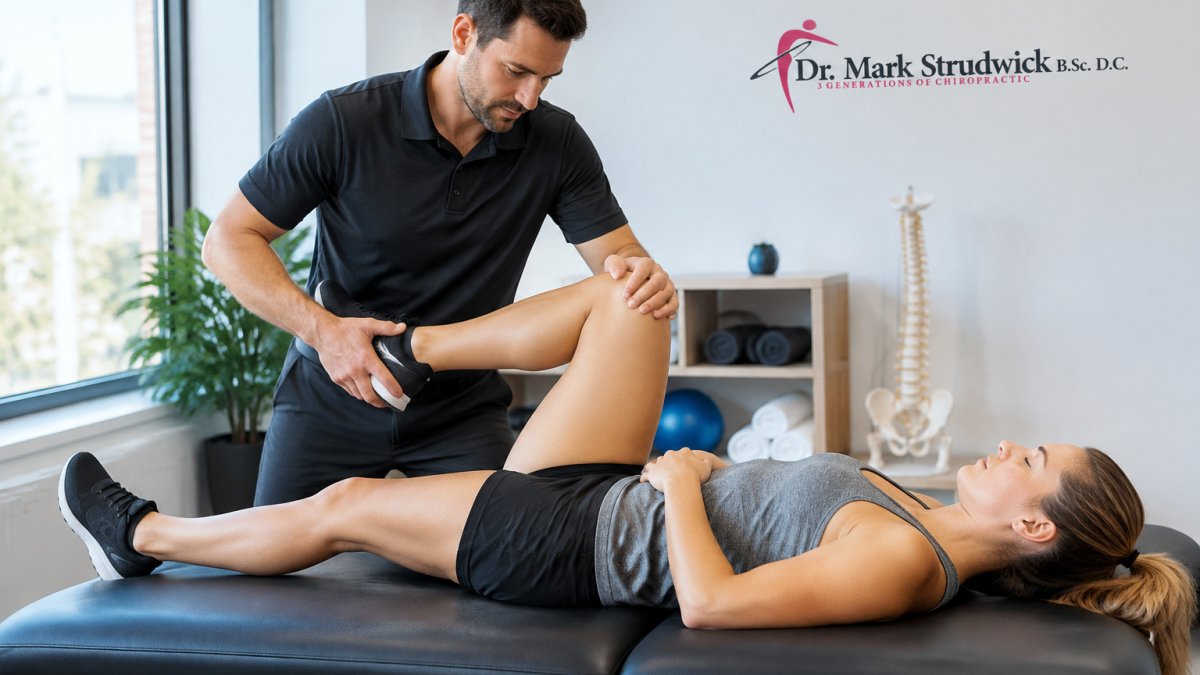
Other warning signs include favoring one side without meaning to, reduced range of motion compared with the uninjured side, and fatigue that sets in faster than it used to. Lingering movement issues like these are worth investigating properly, and a functional movement assessment and training approach in Victoria can show exactly where capacity is missing.
Sports Injury Rehabilitation Exercises That Rebuild Capacity
Rehabilitation exercises work by progressively reloading tissue so it adapts and grows stronger than before. The key word is progressively: too little load changes nothing, and too much too soon causes another breakdown.
Match the Exercise to the Injured Tissue
A ligament sprain, a muscle strain, a bone injury, and a tendon problem do not rebuild the same way, and a plan that ignores the difference is how athletes end up back at square one.
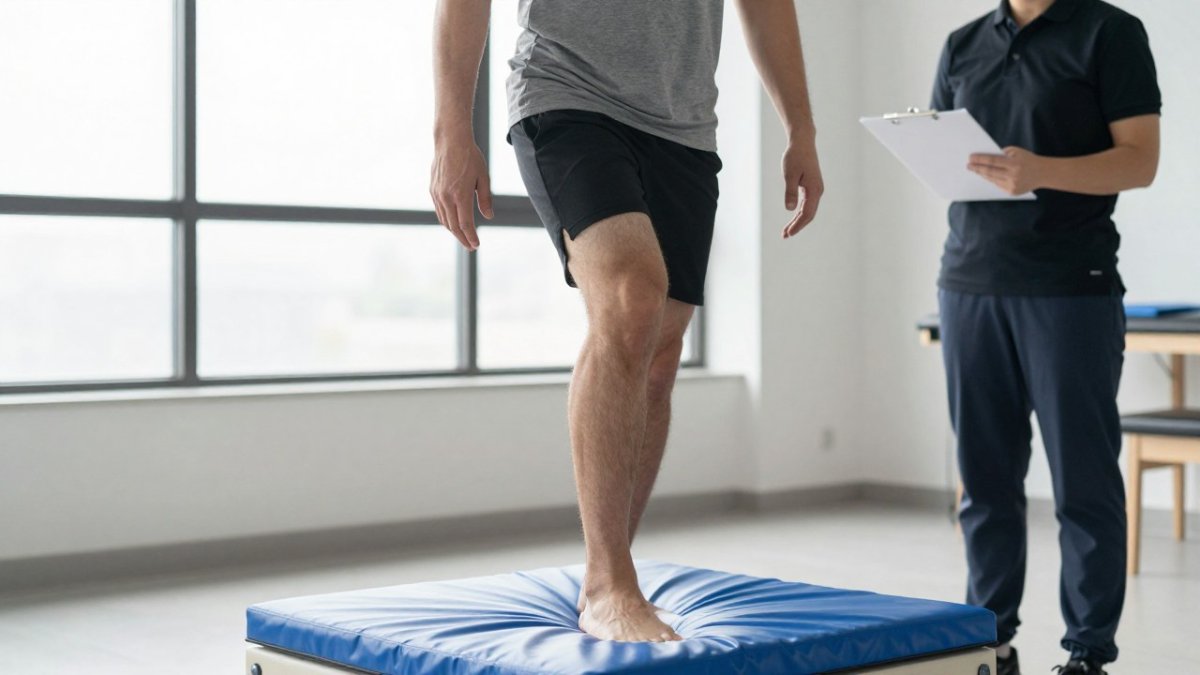
- Ligament sprains (ankle, knee). The ligament regains passive stability slowly, so the priority is surrounding muscle strength and balance/proprioceptive work. Single-leg balance, controlled hopping, and lateral band work belong early; cutting and pivoting come last.
- Muscle strains (hamstring, calf, groin). These tolerate load earlier but re-tear easily at speed. Begin with isometric holds, move to slow lengthening (eccentric) work, and only add sprinting once the muscle handles full-range load without tightness.
- Bone injuries and stress fractures. These need protected loading first. Impact is reintroduced in small, measured doses, and a graded return to running or jumping matters more than strength work until the bone is cleared.
- Tendon problems (tendinopathy). Tendons respond to slow, heavy loading. Isometrics for pain relief, then heavy-slow resistance, then energy-storage loading (spring-like hopping) is a common sequence. Complete rest tends to make tendons weaker, not better.
Progress by Stage, Not by Calendar
Within any of those categories, the same three stages apply, and each stage has a gate you must pass before moving on.
- Calm the tissue. Pain-free isometric holds, 20-30 seconds, several times a day. Gate: daily activities without a flare.
- Rebuild strength and range. Slow concentric and eccentric reps with bodyweight or a band, then added load through free weights or machines. Gate: strength within roughly 10 percent of the uninjured side and full pain-free range of motion.
- Restore speed and sport demand. Plyometrics, change of direction, and sport-specific drills at building intensity. Gate: symptom-free completion of sport-specific testing.
Watch out: the most common mistake is jumping from stage one to stage three because the pain settled, which is precisely how the same structure gives way again.
Flexibility and Mobility Work
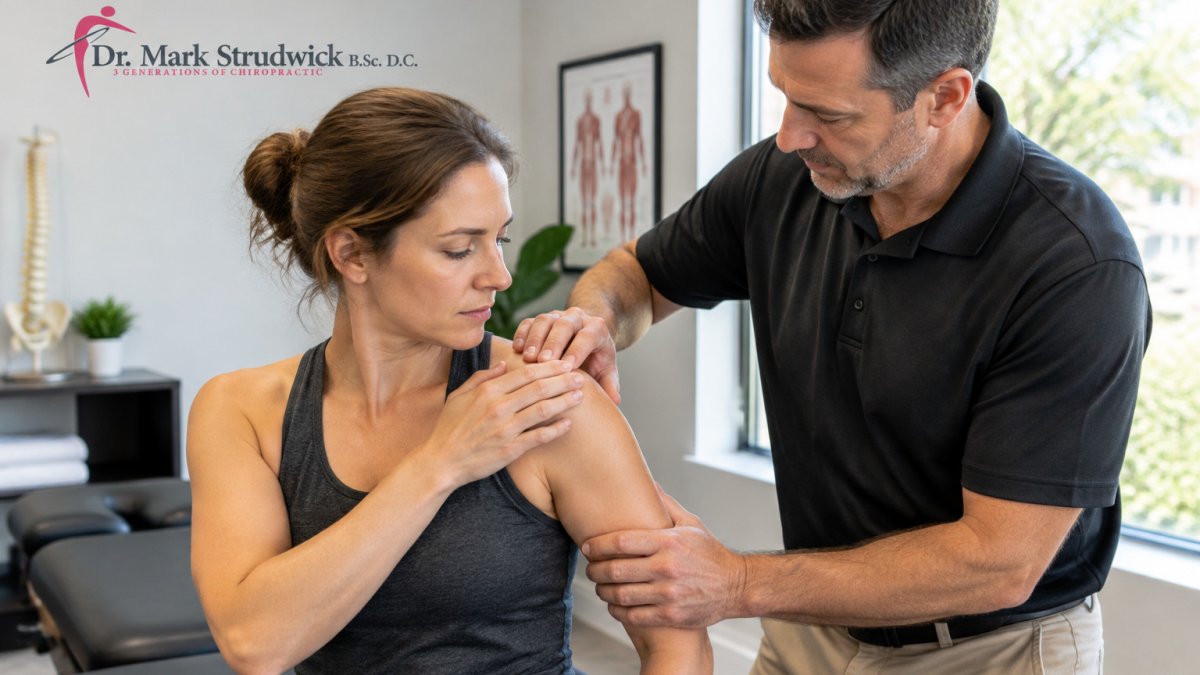
Mobility work restores range of motion so joints move through their full arc without compensation. Gentle static stretching after activity, controlled joint rotations, and targeted soft tissue work all help. At Strudwick Chiropractic, soft tissues can be treated manually and/or with low level laser therapy, and rehabilitative exercises are always part of the treatment plan. Mobility is a supporting player here, not the main event: the strength and loading work above is what actually changes recurrence risk.
How to Build a Return-to-Sport Plan That Holds Up
A return-to-sport plan that holds up is criteria-based, not calendar-based. Time since injury tells you very little; what matters is whether the tissue can handle the demands of the sport.
Readiness Criteria to Test Before Full Training
Instead of asking “is it healed yet,” work through concrete gates. A common set looks like this: (Source: physical activity guidelines for Canadians)
- Pain-free movement. Full range of motion on the injured side with no pain at end range, and no morning stiffness that lingers past the first few minutes of activity.
- Restored strength. Strength within roughly 10 percent of the uninjured side on a comparable test, such as a single-leg press, a calf raise count, or a grip or hamstring test depending on the injury.
- Symmetrical function. Balance and single-leg control that match the other side, and no favoring or guarding when the athlete is not thinking about it.
- Sport-specific testing. Drills that mimic the sport’s demands, completed at full speed without symptoms. For a field or court sport that means sprinting, decelerating, cutting, and landing; for an overhead sport it means throwing or serving at full effort.
Progress in Stages With a Symptom-Free Gate
From there, progression moves in stages: light skills first, then controlled contact or sprinting, then full training, then competition. Performance therapy, which focuses on preventing problems before they recur, fits naturally here, and you can explore performance therapy services in Victoria to see how that stage is structured.
Watch out: passing the strength and range tests does not automatically clear an athlete for contact or competition, because sport-specific testing and clinician sign-off are separate gates that are easy to skip when the athlete feels ready.
Build the Recurrence Plan Into the Return
The return-to-sport plan should not end at the first competition. The weeks after return are the highest-risk window, so keep the strength and balance work in the weekly routine, keep monitoring soreness and sleep, and re-test the readiness criteria if symptoms reappear. That continuity, rather than a single clearance appointment, is what keeps a repeat injury from happening.
Training Load, Recovery, and Monitoring What Matters
Training load is the single most controllable factor in recurrence. Rapid spikes in exercise intensity are a classic cause of overuse injury and repetitive strain.
Monitoring does not require technology. Track weekly training hours, note soreness each morning on a simple scale, and log sleep quality. Two consecutive days of rising soreness or falling energy are a signal to back off.
Warm-Up, Cool-Down, and Technique: The Basics Done Properly
The warm-up is the most skipped prevention tool and one of the most effective. A proper warm-up raises tissue temperature and rehearses the movements the sport demands: five to ten minutes of light aerobic work, dynamic mobility for the relevant joints, and sport-specific drills at building speed.
Cool-downs help the body return to baseline: light movement, gentle stretching, and hydration. Technique matters just as much. Faulty movement mechanics under load, whether in a squat, a throw, or a running stride, concentrate stress on structures that were not built for it.
| Phase | What to Do | Duration | Frequency |
|---|---|---|---|
| Warm-up | Light cardio, dynamic mobility, sport-specific drills | 10-15 min | Every session |
| Strength and conditioning | Progressive resistance for key muscle groups | 20-40 min | 2-3 times weekly |
| Mobility work | Static stretching, joint rotations, soft tissue work | 10 min | Daily or after activity |
| Cool-down | Light movement, gentle stretching, hydration | 5-10 min | Every session |
| Recovery check | Soreness, sleep, and energy log | 2 min | Daily |
Duration
When Recurring Pain Needs a Professional Assessment
Recurring pain needs a professional assessment when it returns with the same activity, keeps you sidelined longer each time, or comes with swelling, instability, or night pain. These patterns suggest the underlying cause was never resolved, and training harder around it usually makes things worse.
A thorough assessment is more than a quick look. At Strudwick Chiropractic, Dr. If you want to understand what a full assessment involves, you can learn about movement assessment in Victoria.
Booking an Assessment Before the Next Flare-Up
The best time to address a recurring injury is before it flares again, not after. An assessment identifies the weakness or movement fault driving the cycle, and a tailored plan of adjusting, soft tissue treatment, and rehabilitative exercises gives the tissue a genuine chance to rebuild.
At Strudwick Chiropractic, care is individualized rather than one-size-fits-all, with direct billing to insurance plans, ICBC, and WorkSafe, and free parking at our Saanich Centre location. If you are ready to break the cycle, book a chiropractic assessment in Victoria or contact Dr. Mark Strudwick for the clinic’s address, phone number, and hours.
Recurring injuries rarely resolve on their own, and the longer the cycle runs, the more training time it costs. Strudwick Chiropractic offers comprehensive assessment, individualized treatment plans, and rehabilitative exercise programs built around your sport and your body.
Frequently Asked Questions
Why do sports injuries keep recurring?
Most recurrences trace back to returning to sport before tissue has rebuilt its capacity. Pain settles long before strength, mobility and movement mechanics return to normal, so the same load that caused the original injury overloads the same tissue again. A previous injury is one of the strongest predictors of a future one. Addressing strength deficits, movement mechanics and training load, rather than waiting for pain to pass, is what reduces the chance of a repeat.
What are the signs of incomplete injury recovery?
Watch for pain that lingers past the expected healing window, swelling that returns after activity, strength noticeably lower on the injured side, stiffness at end range, and apprehension during sport-specific movements. Feeling fine at rest but sore the next day is another signal. These signs point to tissue that has not yet rebuilt capacity. A movement assessment can confirm whether the deficit is real before you increase training load.
How does chiropractic care help in preventing recurring injuries?
Chiropractic care for recurring injuries starts with a full physical, orthopedic and neurologic examination to identify what is actually driving the problem. Treatment may combine adjusting techniques with soft tissue therapy, manually or with low level laser therapy, alongside rehabilitative exercises. At Strudwick Chiropractic, rehab exercises are always part of the plan because they build the capacity that keeps the injury from returning.
What role does rehabilitation play in long-term injury prevention?
Rehabilitation is where capacity gets rebuilt. Sports injury rehabilitation exercises restore strength, mobility and control in the injured tissue and the joints around it. Skipping this stage is the most common reason athletes re-injure. Exercises are prescribed to hasten recovery and address the specific deficits an assessment reveals, so completing them consistently matters more than doing them occasionally.
When should I see a professional for a recurring sports injury?
Book an assessment when the same injury returns, when pain persists beyond a few weeks, or when you cannot get back to your previous training level without symptoms. Chiropractors are trained to recognize red flags and refer you to other care when something more serious is present. A thorough examination gives you a clear answer about what is wrong instead of guessing.