Table of Contents
- How to Relieve Lower Back Pain at Home: Start With a Plan
- Lower Back Pain Relief Exercises You Can Do in 15 Minutes
- Heat or Ice for Lower Back Pain: How to Choose
- Best Sleeping Position for Lower Back Pain
- Red Flags for Lower Back Pain: When Home Care Is Not Enough
- Everyday Movement and Ergonomics That Support Relief
- Conclusion: When to Book a Chiropractor
- Frequently Asked Questions
Last Updated: October 7, 2026
How to Relieve Lower Back Pain at Home: Start With a Plan
Most cases of sudden lower back pain are not caused by serious damage, and gentle movement at home helps more than bed rest.
One rule matters more than the rest. Keep moving.
Back pain is one of the most common reasons adults see a health professional, and most episodes improve within a few weeks with self-care (Canadian health guidance on low back pain).
The routine below takes about 15 minutes.
A quick note before you start: this is general information, not a diagnosis.
Do not push through sharp or shooting pain. A mild stretch should feel like gentle tension, not a stabbing sensation. If a movement sends pain down your leg, stop and get it checked.
Lower Back Pain Relief Exercises You Can Do in 15 Minutes
Lower back pain relief exercises work best when you do a small set often, not one long session once a week. The routine below combines stretching and gentle strengthening. You need no equipment and no gym.
But here is what most guides leave out: the same exercise that helps one back can aggravate another.
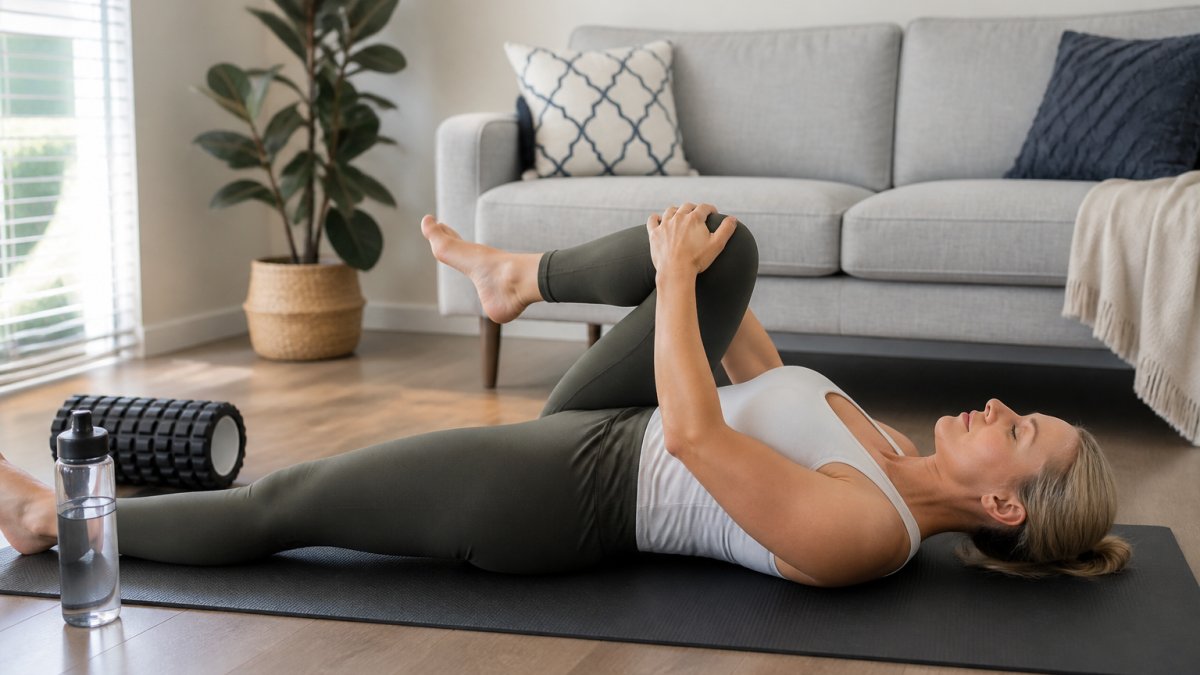
Knee-to-Chest Stretch
The knee-to-chest stretch eases tension in the lower back and improves spinal flexibility. Lie on your back on a firm surface.
Keep your lower back pressed gently toward the floor. Breathe slowly. Hold for 20 to 30 seconds, then lower your feet. Repeat 3 times.
If both knees at once feels like too much, do one leg at a time.
Pelvic Tilts and Bridge Exercise
Pelvic tilts teach you how to control the pelvic area without straining it. Lie on your back with knees bent and feet flat. Gently flatten your lower back against the floor by tightening your stomach muscles.
The bridge exercise builds the back muscles, abdominal muscles, and leg muscles at once. From the same position, press through your feet and lift your hips until your body forms a straight line from knees to shoulders.
For pelvic tilts, think of tilting your pelvis like a bowl of water you are pouring slightly toward your feet. That small motion is the whole move. Most people overdo it and tense everything.
Match the Movement to Your Pain Trigger
This is where a generic routine becomes a personal one. Find the pattern that sounds like you, then adjust:
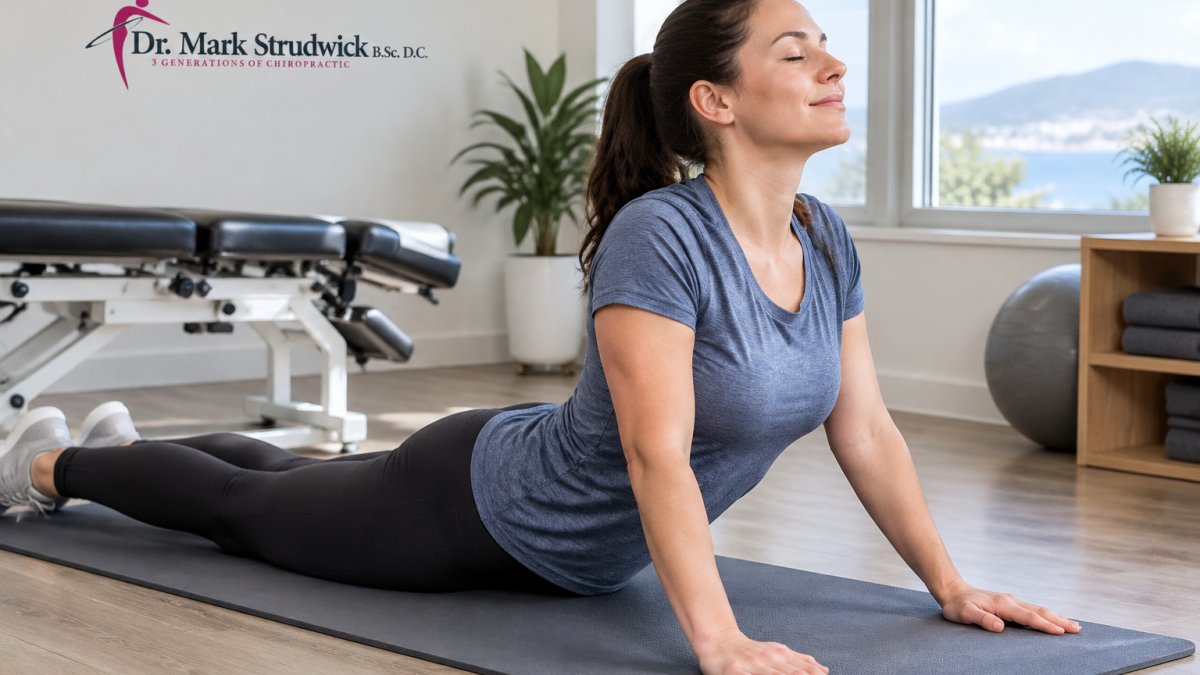
- Pain worse with bending forward: favour extension-based movements. Lie on your stomach and prop up on your forearms for 10 to 20 seconds, then relax. Repeat 5 to 10 times. Skip deep forward stretches like knee-to-chest if they sharpen the pain.
- Pain worse with sitting: your hip flexors are likely tight and your glutes underactive. Add a standing hip flexor stretch (30 seconds per side) and glute bridges before your usual routine.
- Pain worse with standing or walking: favor flexion. Knee-to-chest and pelvic tilts often feel best, and a short lie-down with knees bent can reset the back.
A useful rule: if a movement makes pain spread further down your leg, stop it. If it makes pain retreat toward your center, that is usually a good sign and worth repeating.
How Often to Repeat the Routine
Do this routine once or twice a day, most days. Aim for 10 to 15 minutes per session. Start with fewer repetitions if you are sore, then build up.
- Week 1: one round of each exercise, once daily
- Week 2 onward: two rounds, once or twice daily
- Hold times: 20 to 30 seconds for stretches, 5 seconds for holds
Consistency beats intensity. A short daily routine helps more than an occasional long one.
What Realistic Recovery Looks Like
Most uncomplicated episodes of lower back pain improve substantially within two to six weeks, with the sharpest improvement in the first week or two.
Track progress by function, not by pain score alone. Ask yourself each week:
- Can I sit for longer than I could last week?
- Can I walk further before the pain builds?
- Am I taking fewer pain-relief doses?
If the answers are trending in the right direction, you are on track even if the pain has not vanished. If nothing has changed after two weeks of consistent effort, or if things are getting worse, that is the point to get a professional assessment rather than push harder.
Heat or Ice for Lower Back Pain: How to Choose
Heat or ice for lower back pain is not an either-or question. The two work through different mechanisms, and the right choice depends on what your back is doing right now.
Why ice helps: cold narrows blood vessels and slows nerve conduction, which dampens the sharp, inflamed feeling of a fresh strain. Why heat helps: warmth increases blood flow and relaxes muscle guarding, which is why a stiff, tight back usually responds better to heat than cold.
Use this decision guide:
- First 48 hours after a strain or tweak, or if the area feels hot and swollen: ice. Apply for 10 to 15 minutes at a time, always with a cloth between the pack and your skin. Repeat every 2 to 3 hours if needed.
- Ongoing tightness, morning stiffness, or pain that eases with warmth: heat. A warm shower, heating pad, or hot water bottle for 15 to 20 minutes works well.
- Pain that is neither clearly new nor clearly stiff: try heat first, since it is the more comfortable option for most people. If it does not help within a day, switch to ice.
Over-the-Counter Medication: A Safety-Conscious Guide
Over-the-counter medication can help you stay comfortable enough to keep moving, but it is symptom relief, not a fix. Two categories cover most home use:
- Acetaminophen (paracetamol): eases pain but does not reduce inflammation. Check every other product you take, many cold and flu remedies already contain it, and doubling up can harm the liver.
- NSAIDs (ibuprofen, naproxen): reduce both pain and inflammation. They are not suitable for everyone. Ask a pharmacist before using them if you have stomach ulcers, kidney problems, heart conditions, asthma that worsens with NSAIDs, or if you take blood thinners, steroids, or certain blood pressure medications.
A few practical rules:
- Follow the label dose exactly. More is not better.
- Take NSAIDs with food to reduce stomach upset.
- Do not use them for more than a few days without checking with a pharmacist or doctor.
- If you are pregnant, breastfeeding, or managing a chronic condition, get advice before starting anything.
Your pharmacist is the fastest, most accessible medication resource in the country. Most will review your full medication list and flag interactions in a few minutes, no appointment needed.
What Not to Do
Skip the temptation to combine everything at once. Alternating heat and ice back-to-back on the same spot can irritate skin and confuse your sense of what is actually helping. Pick one approach, use it consistently for a day, and judge by whether you can move more easily, not by whether the pain disappears completely.
If heat, ice, and over-the-counter options are not touching the pain after a week, that is a signal to get assessed rather than to escalate self-treatment.
Best Sleeping Position for Lower Back Pain
The best sleeping position for lower back pain keeps your spine in a neutral line. Most people do well on their side with a pillow between the knees, or on their back with a pillow under the knees.
Try these setups:
- On your side: bend your knees slightly and place a pillow between them. This stops your top leg from pulling your spine out of line.
- On your back: put a pillow under your knees to take pressure off your lower back.
- On your stomach: this is the hardest on your back. If you must, place a thin pillow under your hips.
A firm-but-supportive mattress helps. So does getting in and out of bed with care: roll onto your side, swing your legs down, and push up with your arms rather than folding straight forward.
Red Flags for Lower Back Pain: When Home Care Is Not Enough
Red flags for lower back pain are signs that your pain may have a more serious cause. Most back pain is not dangerous. But some symptoms need urgent medical care, not a home routine.
Seek prompt medical attention if you have:
- Loss of bladder or bowel control
- Numbness around the groin or inner thighs
- Weakness or numbness in one or both legs that is getting worse
- Pain after a serious fall, car accident, or other trauma
These are uncommon, but they matter. Do not wait them out.
Home care suits common, mechanical back pain that eases with movement and rest. Red-flag symptoms point to something that needs a professional assessment. When in doubt, get checked.
Everyday Movement and Ergonomics That Support Relief
Ergonomics and daily movement decide whether your back settles down or keeps flaring. The way you sit, lift, and move at home and at work either supports your spine or works against it.
Start with these habits:
- Sitting: keep your feet flat and your screen at eye level. Get up and move every 30 to 45 minutes.
- Lifting: bend your knees, keep the load close, and avoid twisting as you lift.
- Standing: shift your weight and use a footrest if you stand for long stretches.
- Walking: short, regular walks are one of the best things you can do. They feed the spine and loosen tight muscles.
If you work at a desk, set a timer to stand and stretch. Small, frequent movement changes beat one big effort.
When to Book a Chiropractor
If home care is not easing your pain after a couple of weeks, or the pain keeps coming back, a hands-on assessment can help. At Strudwick Chiropractic, Dr. Mark Strudwick brings over 25 years of clinical experience and an International Certificate in Sports Chiropractic to every visit. We combine evidence-based adjustive techniques, soft tissue therapy, and rehabilitation exercises, and we tailor each plan to how you move and where your pain starts.
Conclusion: When to Book a Chiropractor
Home exercises, heat or ice, and better daily habits resolve most everyday back pain. But if the pain lingers, keeps returning, or comes with any red-flag symptom, it is time for a proper assessment.
At Strudwick Chiropractic, we build treatment programs around your specific needs, using evidence-based adjustive techniques, soft tissue therapy, and rehabilitation exercises. With direct billing to insurance plans, ICBC, and WorkSafe, and free parking at our Saanich Centre clinic, care is easy to access.
Frequently Asked Questions
How do I get rid of lower back pain quickly?
For most sudden flare-ups, gentle movement beats bed rest. Try knee-to-chest stretches, pelvic tilts, and a short walk within your comfort zone. Apply heat for 15 to 20 minutes to relax muscle tension. Over-the-counter medication such as ibuprofen may ease pain temporarily, but follow the label and check with a pharmacist if you have other health conditions. If pain does not improve within a week or worsens, see a health professional.
Should I use heat or ice for lower back pain?
Use ice during the first 48 hours after an injury or when the area feels hot and swollen; apply for 10 to 15 minutes with a cloth barrier. After that, heat is often more soothing for stiffness and muscle tension. Many people alternate both. Neither treats the underlying cause, so pair either option with gentle exercise and activity modification.
What are the red flags for lower back pain that mean I should see a doctor?
Seek urgent care if you have loss of bladder or bowel control, numbness in the groin or saddle area, progressive weakness in your legs, fever with back pain, unexplained weight loss, or pain that follows a fall or accident. These red flags for lower back pain can point to a serious condition and need prompt medical assessment, not home remedies.
When should I see a chiropractor for lower back pain?
If pain lasts more than a week, keeps returning, or limits your daily activities despite home care, a chiropractor can assess your movement, provide hands-on treatment, and build a rehabilitation plan. In Victoria, BC, clinics like Strudwick Chiropractic offer direct billing to ICBC and WorkSafe for accident and workplace injuries. Book an assessment to get a clear diagnosis and a tailored program.