Last Updated: October 28, 2026
Quick Summary
The best treatment for chronic lower back pain is a staged plan that starts with a proper diagnosis to rule out red flags, then builds movement through active self-care, adds guided therapy and manual care, and only considers medical interventions when needed. Most chronic cases have no single clear cause on imaging, which is normal.
- Chronic lower back pain lasts 12 weeks or longer and rarely responds to quick fixes.
- Get up every 30 to 45 minutes and move to avoid stiffening the lower back.
- Physical therapy has the strongest and most consistent evidence among guided options.
- Meaningful improvement often takes weeks to months, and flare-ups along the way are normal.
- See a doctor promptly for red flags like loss of bladder or bowel control or groin numbness.
Table of Contents
- Why Chronic Lower Back Pain Needs a Different Approach
- Chronic Low Back Pain Treatment Options: A Step-by-Step Pathway
- 1. Exercise and Physical Activity: The Foundation of Relief
- 2. Lower Back Pain Exercises for Beginners: Safe Ways to Start Moving
- 3. Low Back Pain Relief at Home: Heat, Cold, and Self-Care That Works
- 4. Physical Therapy, Chiropractic Care, and Manual Therapy
- 5. Medications, Injections, and Medical Procedures
- When to See a Doctor for Lower Back Pain
- Frequently Asked Questions
Why Chronic Lower Back Pain Needs a Different Approach
Chronic lower back pain lasts 12 weeks or longer and rarely responds to the quick fixes that help a short-lived strain. The best treatment for chronic lower back pain is rarely one thing, but a staged plan that starts with a proper diagnosis. (Source: Statistics Canada’s health surveys)
Below, we break down treatment options for chronic lower back pain.
Chronic Low Back Pain Treatment Options: A Step-by-Step Pathway
Treatment for chronic low back pain follows a sequence: rule out serious causes, build movement, add hands-on care, then consider medical options. Skipping steps wastes time and money.
Step 1: Rule Out Red Flags and Get a Diagnosis
Start with a proper assessment: a qualified practitioner checks your history, movement, and symptoms to rule out serious causes. Red flags include unexplained weight loss, loss of bladder or bowel control, groin numbness, fever, or pain after a fall, these need urgent medical review, not chiropractic care.
Most chronic cases have no single clear cause on imaging. That is normal.
Step 2: Start With Active Self-Care
Movement is the base layer. Gentle activity, walking, and simple stretches keep the spine and surrounding muscles working.
Step 3: Add Guided Therapy and Manual Care
When self-care plateaus, guided care helps. This means structured exercise with a practitioner and hands-on treatment for stiff joints and tight soft tissue.
Step 4: Consider Medical Interventions When Needed
Medical options, including medications, injections, and procedures, are decisions to make with your doctor.
| Step | What Happens | Who It Suits |
|---|---|---|
| 1. Diagnosis | Assessment and red-flag screening | Everyone |
| 2. Self-care | Walking, stretching, heat or cold | Most people |
| 3. Guided care | Therapy, manual treatment, rehab | Pain lasting weeks |
| 4. Medical options | Medication, injections, procedures | Persistent, limiting pain |
1. Exercise and Physical Activity: The Foundation of Relief
Posture and movement matter too. Sitting for long stretches stiffens the lower back. Get up every 30 to 45 minutes and move.
2. Lower Back Pain Exercises for Beginners: Safe Ways to Start Moving
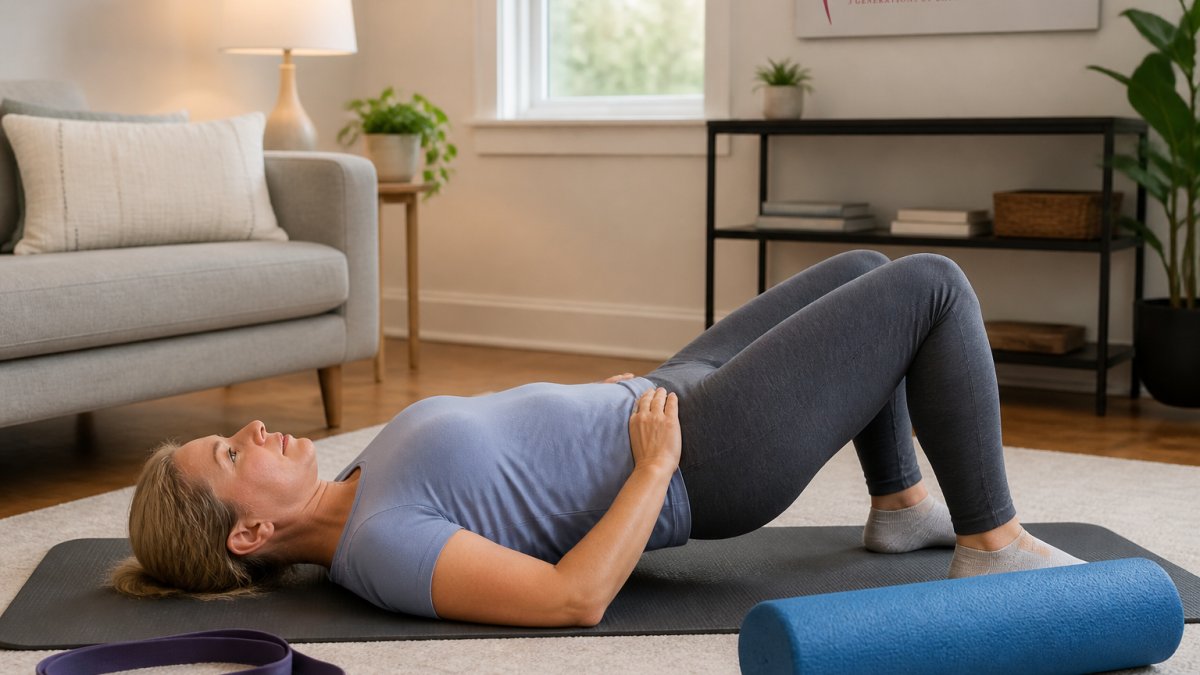
For a full beginner routine you can follow at home, see our guide to lower back pain exercises for beginners. It walks through seven gentle moves with clear form cues.
3. Low Back Pain Relief at Home: Heat, Cold, and Self-Care That Works
Home care handles the day-to-day.
For a deeper walkthrough of home relief, our article on how to relieve lower back pain at home covers heat, cold, and daily habits in detail.
4. Physical Therapy, Chiropractic Care, and Manual Therapy
Guided care matters most when self-care has plateaued, when you are moving but not improving, or pain keeps pulling you back into the same cycle. These options overlap more than their marketing suggests but differ in focus, evidence, and strengths.
What each approach actually does
- Physical therapy: Builds strength, endurance, and movement control, usually through a graded exercise program plus education. It is the guided option with the strongest and most consistent evidence for chronic low back pain, because it directly targets the deconditioning and fear of movement that keep pain going.
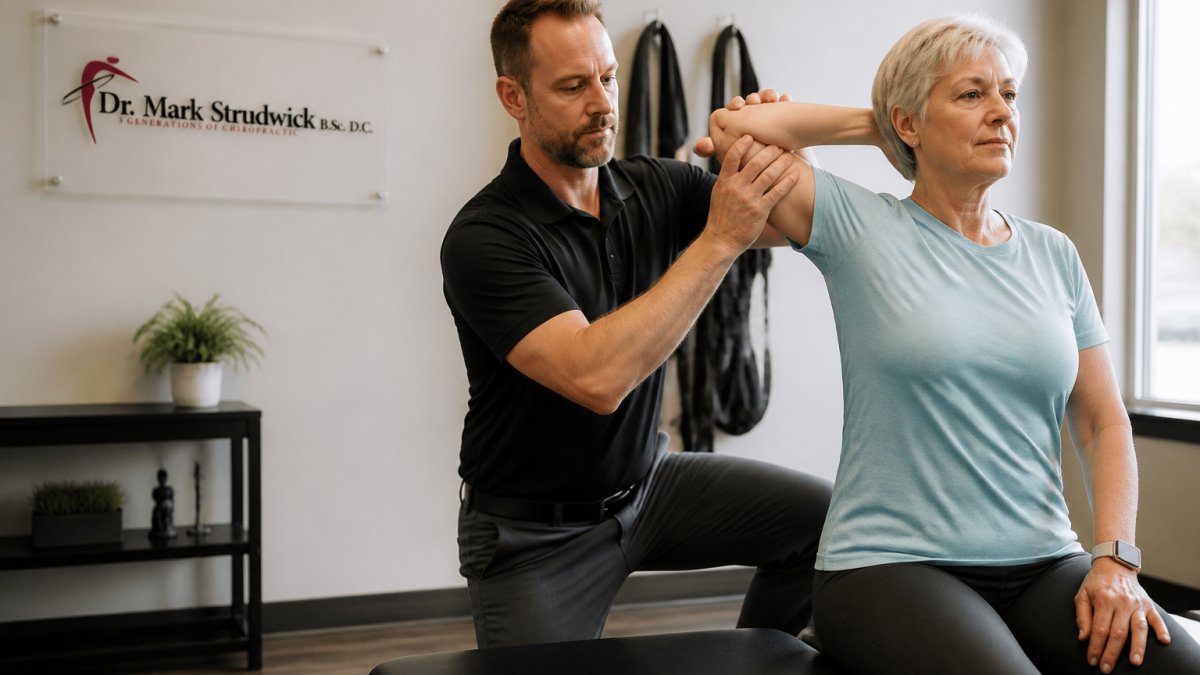
- Chiropractic care and spinal manipulation: Uses controlled, high-velocity thrusts or low-velocity mobilization to improve joint motion and reduce pain in the short term. Evidence suggests small-to-moderate short-term improvements in pain and function for some people, similar in size to other manual therapies. It works best as part of a plan that includes exercise, not as a standalone fix. Chiropractic can help to reduce the pain so that one can perform their exercises without so much discomfort.
- Massage and soft-tissue therapy: Eases muscle tension and improves comfort, often making it easier to move and exercise. Evidence for lasting change in chronic low back pain is limited, but short-term relief and improved tolerance for activity are realistic goals. For details on massage therapy in Victoria, BC and booking, see that page.
- Manual therapy combined with exercise: The combination consistently outperforms either alone in practice, because one addresses pain and motion while the other builds capacity.
Evidence at a glance
| Approach | Best evidence for | Typical role | Main limitation |
|---|---|---|---|
| Physical therapy / graded exercise | Reducing pain and disability over weeks to months | Core of guided care | Requires consistent effort; progress is gradual |
| Chiropractic / spinal manipulation | Short-term pain and function | Adjunct to exercise | Benefit is usually temporary without active work |
| Massage / soft-tissue therapy | Short-term comfort and mobility | Adjunct, especially early on | Limited evidence for lasting change |
| Combined manual therapy + exercise | Better than either alone | Practical default | Needs a coordinated plan |
What a realistic course looks like
Progress is usually gradual: meaningful improvement often takes weeks to months of consistent activity, and flare-ups along the way are normal, not a sign of failure.
Trade-offs and safety
At Strudwick Chiropractic, Dr. Mark Strudwick brings over 25 years of experience and holds an International Certificate in Sports Chiropractic. Care blends adjustive techniques, soft tissue therapy, and rehab exercises tailored to you. If you want hands-on care, you can book a chiropractor in Victoria, BC.
5. Medications, Injections, and Medical Procedures
Medical options are not a first step for chronic lower back pain, and they are not a cure. They can quiet pain enough to let you move, sleep, and do the rehab that changes the underlying problem. The right question is not “which is strongest” but “which is worth the trade-off for my situation.”
Over-the-counter medications
- What they are: Nonsteroidal anti-inflammatory drugs (NSAIDs) such as ibuprofen or naproxen, and acetaminophen.
- Evidence for chronic pain: Modest. NSAIDs can take the edge off for some people over the short term, but the benefit for chronic low back pain is usually small and not clearly better than placebo across large groups. Acetaminophen has weak evidence for chronic low back pain specifically.
- Limitations: NSAIDs carry gastrointestinal, kidney, and cardiovascular risks, especially with long-term use or in older adults. They should not be combined casually, and anyone with ulcers, kidney disease, or heart risk should check with a doctor or pharmacist first.
- Realistic role: Short-term bridge to keep moving, not a long-term strategy.
Prescription medications
- What they are: Muscle relaxants, certain antidepressants used for nerve-related pain, and gabapentinoids.
- Evidence for chronic pain: Mixed. Some medications help specific pain patterns (for example, nerve pain that radiates down the leg), but routine use for nonspecific chronic low back pain is not well supported and guidelines increasingly caution against relying on opioids.
- Limitations: Drowsiness, dizziness, dependence risk with opioids, and interactions with other medications. These are a doctor’s call, not a self-care decision.
- Realistic role: Targeted, time-limited, and reviewed regularly rather than open-ended.
Injections
- Epidural steroid injection: Delivers corticosteroid near the spinal nerves. Evidence suggests modest, short-term relief for some people with radiating leg pain (sciatica-type symptoms), but benefit for pain that stays in the back is less consistent. Relief often lasts weeks to a few months, not permanently.
- Nerve block: Numbs a specific nerve to confirm whether it is the pain source and to provide temporary relief. It is often diagnostic as much as therapeutic.
- Facet joint injections: Target the small joints at the back of the spine. Response varies, and relief is typically temporary.
- Limitations: Infection, bleeding, temporary increase in pain, and a small risk of nerve injury. Repeated steroid injections carry cumulative risks. Injections do not rebuild strength, so they work best paired with exercise.
Procedures and surgery
- Radiofrequency ablation: Uses heat to disable a nerve that is transmitting pain signals, usually after a diagnostic block confirms the target. It can provide months of relief for selected people with facet-joint pain, but it is not appropriate for everyone and the nerve can regrow.
- Spinal cord stimulation: An implanted device that modifies pain signals. Reserved for carefully selected, persistent cases after other options have failed, and it requires a trial before permanent implantation.
- Surgery: Considered for a small group, for example, clear nerve compression with progressive weakness, or structural problems that have not responded to months of non-surgical care. Most people with chronic low back pain do not need surgery, and outcomes depend heavily on patient selection.
Discuss the benefits, risks, and alternatives of medication, injections, or procedures with your doctor before deciding.
How to think about the trade-offs
Ask three questions before any medical option:
- What is the realistic benefit, and for how long? Temporary relief can be worth it if it unlocks rehab, but it is not the same as a fix.
- What are the risks for me specifically? Age, other health conditions, and other medications change the calculus.
- What is the exit plan? A good plan includes how long you will try it, what improvement looks like, and what happens if it does not work.
When to See a Doctor for Lower Back Pain
See a doctor promptly for red-flag symptoms: loss of bladder or bowel control, groin numbness, unexplained weight loss, fever, or pain after a significant injury. These need urgent review.
For chronic pain that is not improving with self-care, a professional assessment makes sense. If you are unsure whether hands-on care is right for you, our guide on when to see a chiropractor for back pain lists seven clear signs.
At Strudwick Chiropractic, we build treatment around your specific needs, using adjustive techniques, soft tissue therapy, and rehab exercises. We offer direct billing to insurance plans, ICBC, and WorkSafe, with free parking at Saanich Centre. Get started with Strudwick Chiropractic.
Frequently Asked Questions
What is the best treatment for chronic lower back pain?
There is no single best treatment for chronic lower back pain. Options include staying mobile, beginner exercises, physical therapy, manual therapy, and, if appropriate, medical options such as injections or prescription medications. Discuss suitable options with a qualified professional.
Can exercise help chronic lower back pain?
Exercise options people may consider include walking, water aerobics, and core strengthening. Ask a qualified professional whether these or other lower back pain exercises for beginners are appropriate for you.
When should I seek professional care for persistent lower back pain?
Consider consulting a qualified professional about persistent or recurring pain that limits daily activities. For urgent concerns, seek medical care. A chiropractor or physiotherapist may be among the professionals to discuss care options with.
What are some safe beginner exercises for lower back pain?
Exercise options people may consider include pelvic tilts, knee-to-chest stretches, cat-cow movements, and walking. Ask a qualified professional whether these movements are appropriate for you.