Table of Contents
- Why Personalized Pain Treatment Matters for Long-Term Results
- Chiropractic Care for Back Pain: Moving Beyond Temporary Relief
- Soft Tissue Therapy for Pain: Addressing Root Causes
- Rehabilitation Exercises for Mobility: Building Strength and Flexibility
- Recovery from Sports Injuries: Preventing Re-Injury
- How Treatment is Customized to Your Specific Condition
- Realistic Timelines and What to Expect in Your Recovery
- Frequently Asked Questions
Last Updated: October 11, 2026
Why Personalized Pain Treatment Matters for Long-Term Results
Chronic pain affects how you move, sleep, and work. The standard approach, pain medication or generic exercises, often provides temporary relief without addressing the root cause. Personalized pain treatment delivers lasting results because it targets your specific condition rather than treating pain as a one-size-fits-all problem.
The difference between temporary relief and restored mobility comes down to diagnosis. When a chiropractor understands your injury history, daily activities, and movement patterns, they can design a treatment plan that actually works for your body. This approach prevents re-injury and builds long-term health instead of cycling through short-term fixes.
Personalized pain treatment restores mobility and accelerates healing by addressing the root cause of your pain, not just the symptoms.
Chiropractic Care for Back Pain: Moving Beyond Temporary Relief
Back pain from desk work or injury responds well to chiropractic care when the treatment fits your specific condition. Many people experience temporary relief from adjustments alone, but lasting improvement often requires soft tissue work, targeted exercises, and perhaps even postural correction combined.
Chiropractic care for back pain involves more than spinal adjustments. A comprehensive approach includes assessing your movement and posture, identifying movement restrictions, and correcting the patterns that created the pain in the first place. This is why treatment is customized, your back pain likely has a different cause than someone else’s, even if the symptoms feel similar.
According to Canadian Chiropractic Association guidelines, evidence-based care combines manual therapy with rehabilitation to restore function and prevent recurrence. When you address the underlying dysfunction, not just the pain signal, your body can heal properly.
Relying only on pain medication or temporary relief delays healing and increases the risk of chronic pain developing. The longer dysfunction persists untreated, the harder it becomes to reverse.
Soft Tissue Therapy for Pain: Addressing Root Causes
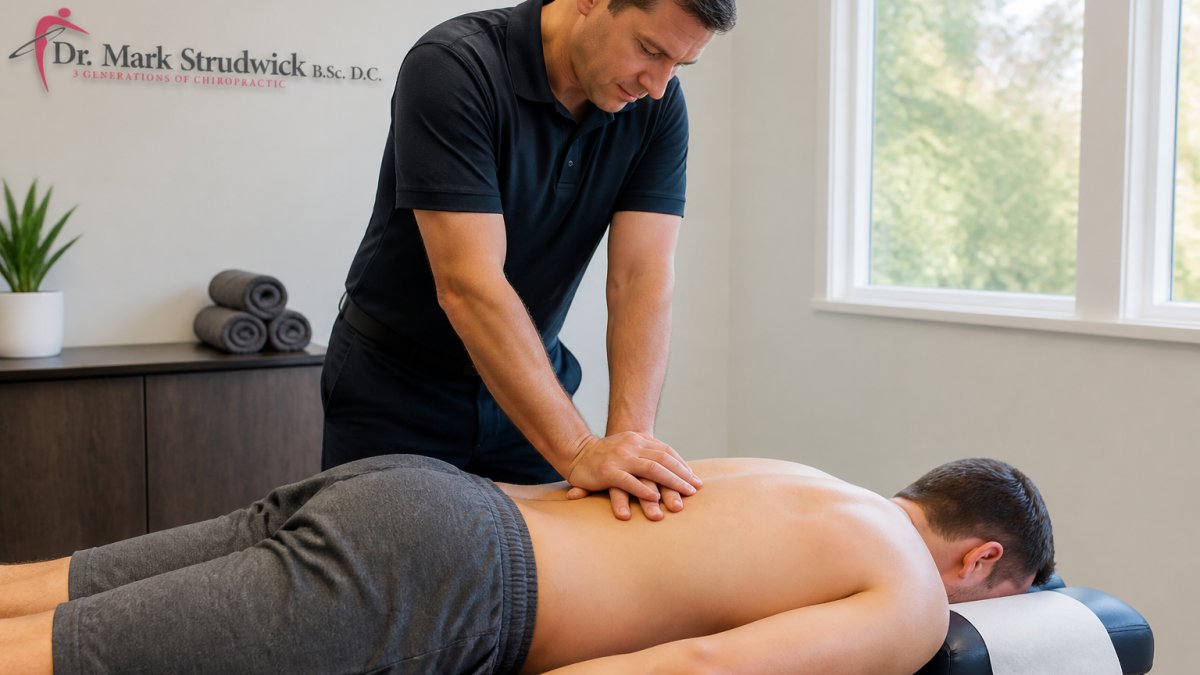
Soft tissue therapy targets muscles, tendons, and ligaments that spinal adjustments alone cannot fully address. This hands-on treatment reduces inflammation, improves circulation, and restores tissue function, essential steps for accelerated healing. Unlike joint manipulation, soft tissue work directly addresses the muscular and connective tissue restrictions that limit movement and perpetuate pain cycles.
Common soft tissue techniques include myofascial release, trigger point therapy, and active release technique (ART).
The evidence supporting soft tissue therapy is strongest for musculoskeletal pain from repetitive strain, postural dysfunction, and sports injury. Manual soft tissue work combined with exercise can produce better long-term outcomes than either modality alone. However, soft tissue therapy is not appropriate for acute inflammation, severe tissue damage, or conditions requiring imaging first (such as suspected fracture or ligament tear).
Many athletes and office workers overlook soft tissue therapy, focusing instead on joint adjustments. But restricted muscles limit your range of motion and create compensation patterns that cause new injuries. Soft tissue work breaks these cycles by releasing tension and restoring normal movement patterns. The technique involves direct pressure, stretching, and mobilization of affected tissues. When combined with rehabilitation exercises, soft tissue therapy for pain provides both immediate relief and long-term improvement.
Treatment frequency typically ranges from one to three sessions per week for acute conditions, tapering to maintenance visits as function improves. Your chiropractor should reassess your response and adjust the treatment plan if progress stalls or if soft tissue work alone is insufficient.
Rehabilitation Exercises for Mobility: Building Strength and Flexibility
Rehabilitation exercises for mobility are the foundation of lasting recovery. Adjustments and soft tissue work create the opportunity for healing, but targeted exercises rebuild strength and restore movement patterns your body needs for daily life.
The best rehabilitation exercises are specific to your injury and movement limitations. A generic stretching routine won’t fix the muscle imbalances that caused your pain. Instead, your treatment plan should include exercises that address your weak areas, improve your range of motion, and retrain proper movement patterns.
Progressive exercise is essential. You start with gentle mobility work, advance to strengthening exercises, then move to functional training that mimics your daily activities. This progression ensures your tissues adapt properly and prevents re-injury when you return to normal activity.
Recovery from Sports Injuries: Preventing Re-Injury
Sports injuries heal faster when treatment focuses on both immediate pain relief and long-term prevention. Many athletes return to activity too quickly, re-injure the same area, and end up with chronic problems. Proper recovery requires a structured timeline and specific exercises that restore full function.
Recovery from sports injuries involves understanding how the injury occurred and correcting the movement patterns that caused it. If a shoulder injury happened during throwing, your treatment plan must include exercises that improve shoulder stability and movement control during that exact motion.
Preventing re-injury means building strength beyond baseline and improving movement quality. This is where personalized pain treatment makes the biggest difference. A treatment plan designed for your sport and your specific weakness protects you far better than generic injury prevention.
Return to sport gradually using a structured progression. Start with pain-free range of motion, advance to strengthening, then add sport-specific movements. Rushing this process is the most common cause of re-injury.
How Treatment is Customized to Your Specific Condition
Customized treatment begins with a thorough assessment of your injury, movement patterns, and daily activities. A chiropractor should ask detailed questions about how your pain started, what movements make it worse, and what your goals are for recovery.
This information guides every decision in your treatment plan. If your back pain comes from prolonged sitting, your exercises will focus on hip and core stability. If your shoulder pain comes from overhead activity, your rehabilitation will emphasize shoulder stability in that position. Generic treatment ignores these details and produces generic results.
Dr. Strudwick uses evidence-based assessment techniques to identify the specific structures causing your pain and the movement restrictions limiting your recovery. This precision means your treatment addresses your actual problem, not a guessed diagnosis. Your plan adjusts as you improve, progressing to more challenging exercises and functional training that matches your real-world demands.
Realistic Timelines and What to Expect in Your Recovery
Recovery timelines vary based on injury severity, your age, overall health, and how consistently you follow your treatment plan. Acute injuries (sudden onset) often improve within 2-6 weeks with proper care. Chronic pain (long-standing) typically requires 8-12 weeks of consistent treatment before significant improvement. However, these timelines assume regular clinic visits and daily home exercises, skipping either component extends recovery substantially.
Measurable progress is more useful than calendar days. Your chiropractor should track specific outcomes at each visit: pain on a 0-10 scale, range of motion in degrees, strength testing, and functional goals (such as “return to running” or “sit at desk for 8 hours without pain”).
What to expect depends on your commitment to rehabilitation exercises at home. Clinic visits provide adjustments and soft tissue work, but the exercises you do between appointments drive most of your progress. A typical recovery plan includes clinic visits initially, tapering as you improve, then transitioning to maintenance care to prevent recurrence.
Realistic expectations also include setbacks. Some days your pain will feel worse before it feels better, this is normal as inflammation resolves and your body adapts to new movement patterns. Your chiropractor should explain this process and adjust your plan if progress stalls. Progress isn’t always linear. You might improve rapidly for two weeks, then plateau for one week while your body consolidates gains. Understanding these patterns prevents discouragement and keeps you committed to recovery.
Warning signs that warrant medical evaluation or imaging include: sharp, shooting pain that worsens despite treatment; numbness or tingling that spreads; loss of bladder or bowel control; unexplained weight loss; fever; or pain that wakes you at night. These may indicate conditions requiring imaging (MRI, X-ray) or specialist referral. If your pain does not improve by 20-30% within 4 weeks of consistent treatment, ask your chiropractor whether imaging or medical consultation is appropriate.
Cost and visit frequency are practical considerations. Many insurance plans cover chiropractic care; WorkSafe coverage is available for work-related injuries. Direct billing to insurance can reduce out-of-pocket costs, ask your clinic whether this option is available.
Frequently Asked Questions
How does personalized pain treatment differ from standard chiropractic care?
Personalized pain treatment starts with a thorough assessment of your specific condition, medical history, and lifestyle. Rather than applying the same approach to every patient, your treatment plan is customized based on the root cause of your pain, your mobility limitations, and your recovery goals. This targeted approach typically produces faster results and longer-lasting relief than one-size-fits-all treatment.
How long does it typically take to regain mobility after an injury?
Recovery timelines vary depending on injury severity, your age, and how consistently you follow your rehabilitation program. Your practitioner can give you a more specific timeline after your initial assessment.
Can chiropractic care actually prevent sports injuries from coming back?
Yes, when combined with rehabilitation exercises and corrected movement patterns. Chiropractic care identifies the underlying biomechanical issues that led to injury, such as muscle imbalances or joint restrictions. Soft tissue therapy and targeted rehabilitation exercises then rebuild strength and flexibility in the affected area. This comprehensive approach addresses the cause rather than just managing symptoms, significantly reducing re-injury risk in athletes.
What should I expect at my first chiropractic assessment?
Your initial appointment includes a detailed history of your pain, injury, and health background. Your practitioner will perform physical tests to assess your range of motion, strength, posture, and joint function. Based on these findings, they’ll explain what’s causing your pain and outline a customized treatment plan. This assessment is essential for creating a personalized approach rather than guessing at treatment.